
What if a 5-second test could predict your life expectancy better than your weight or blood pressure?
That’s exactly what recent studies suggest about grip strength — a simple but powerful indicator that’s emerging as one of the strongest predictors of long-term health and longevity.
🔍 What Is Grip Strength and How Is It Measured?
Grip strength measures how much force your hand and forearm muscles can exert.
It’s usually assessed with a hand dynamometer, where you squeeze as hard as you can for a few seconds.
While it may seem like a minor localized test, it actually reflects your overall musculoskeletal and neurological condition.
👉 Grip strength is strongly linked to:
- Risk of falls and fractures
- Functional independence in older adults
- Cardiovascular health
- Hospitalization risk
- All-cause mortality
📉 ¿Why Is It Connected to Longevity?
Grip strength is considered a biomarker of physiological reserve. The stronger your body, the more resilient it is to aging, disease, and physical stress.
👉 Key insights:
- A large-scale study (The Lancet, Leong et al., 2015) involving 140,000+ people across 17 countries found that every 5 kg drop in grip strength was associated with a 17% higher risk of death from any cause.
- Lower grip strength is also associated with poor recovery after surgery, reduced quality of life, and increased dependency.
🏋️♂️ ¿How Can You Improve Grip Strenght?
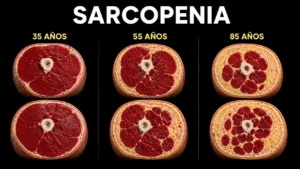
Grip strength naturally declines with age (sarcopenia), but the good news is that it can be trained and maintained with the right strategies:
- General strength training (free weights, pulls, rows, deadlifts, etc.)
- Targeted grip exercises: farmer’s carries, dead hangs, towel grips, squeezing a ball
- Functional daily activities that involve manual strength (lifting, climbing, carrying)
📌 Important: It’s not just about having strong hands — grip strength is a reflection of total body strength and resilience.er un músculo fuerte, funcional y protector.
✅ Conclusion: A Small Test That Speaks Volumes
Grip strength is more than a measure of hand power.
It’s a simple but powerful indicator of physical health, functional capacity, and future longevity.
If you want to live longer — and better — build strength.
And if you want to know how you’re doing right now, test your grip.
References
Leong, D. P., et al. (2015). Prognostic value of grip strength: findings from the Prospective Urban Rural Epidemiology (PURE) study. The Lancet, 386(9990), 266–273.
Rantanen, T., et al. (1999). Midlife hand grip strength as a predictor of old age disability. JAMA.
Bohannon, R. W. (2008). Hand-grip dynamometry predicts future outcomes in aging adults. Journal of Geriatric Physical Therapy.
American College of Sports Medicine (2021). ACSM’s Guidelines for Exercise Testing and Prescription.
Dodds, R. M., et al. (2014). Grip strength across the life course: normative data from 12 British studies. Age and Ageing.